Amallia: A Modern Handwritten Script Font for Elegant Brands
In the world of digital design and branding, the choice of typeface is never just about legibility; it is about voice. A font tells a story before the reader even processes the words, and few typefaces tell a story of sophistication quite like Amallia. As a beautifully flowing and elegant modern handwritten script font, Amallia occupies a specific, high-value niche in the designer’s toolkit. It is not merely a collection of letters but a carefully crafted visual asset designed to evoke emotion, luxury, and authenticity. For entrepreneurs, designers, and content creators looking to add a human touch to their work without sacrificing professionalism, understanding how to leverage a premium font like Amallia can be a game-changer for brand identity.
The Anatomy of Elegance: Understanding Amallia’s Visual Character
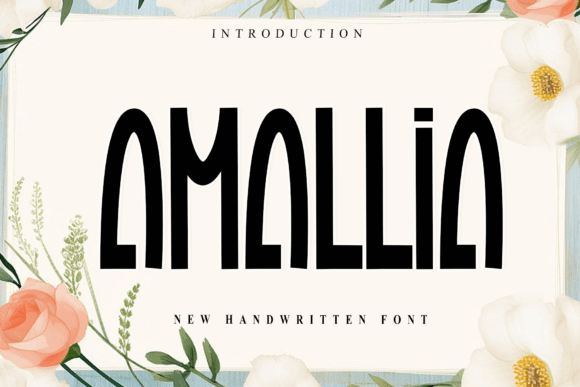
To use a font effectively, you must first understand its personality. Amallia is defined by its smooth, generous curves and graceful, elongated strokes. Unlike traditional calligraphy fonts that can sometimes feel dated or overly ornate, Amallia leans into a modern aesthetic. The letters connect in a way that feels natural, mimicking the fluid motion of a skilled hand writing on high-quality paper. This creates a visual rhythm that draws the eye along the baseline, making it an excellent choice for headers and display text.
The visual weight of Amallia is balanced. It is not too thin that it disappears on busy backgrounds, nor is it so heavy that it overwhelms the design. This balance is crucial for a display font. When you look at the details, you will notice the variation in stroke width—a hallmark of authentic handwritten fonts—which adds depth and texture to the design. This characteristic makes it a standout option for projects that require a sweeping, authentic, and naturally luxurious touch. It avoids the sterile feel of geometric sans-serifs, offering instead a warm, inviting presence.
Where Amallia Shines: Practical Applications for Creatives
The versatility of a script font like Amallia allows it to be applied across a wide range of mediums. However, its specific style—leaning toward the luxurious and elegant—makes it particularly potent in certain sectors. For small business owners and graphic designers, knowing where to deploy this typeface is key to maximizing its impact.
- Wedding Stationery and Invitations: This is the most natural habitat for Amallia. The font’s graceful elongated strokes mimic the look of high-end engraving or hand-lettering. It works beautifully for names, dates, and headings on save-the-dates, invitations, and RSVP cards. Paired with a clean, light-weight sans serif font for the body text, it creates a hierarchy that is both readable and romantic.
- Personal Branding and Photography Watermarks: For photographers, influencers, and consultants, a signature look is essential. Amallia functions perfectly as a digital signature. Using it as a watermark ensures that your work is marked with a brand asset that looks professional rather than distracting. In personal branding, it can be used for your primary logo or the header of your website to inject personality immediately upon a visitor's arrival.
- Editorial and Packaging Design: In the world of packaging design, shelf appeal is everything. Amallia is an excellent choice for beauty products, artisanal goods, or luxury food items. It suggests that the product inside is crafted with care. Similarly, in editorial design, such as magazine headers or pull quotes, it breaks up the monotony of standard serif or sans-serif blocks, adding a dynamic, artistic flair to the layout.
Strategic Typography: How Fonts Influence Brand Perception
Typography is a silent ambassador for your brand. The fonts you choose influence how your audience perceives your values, quality, and attention to detail. Using a creative font like Amallia does more than just decorate a page; it sends psychological signals. The flowing nature of the script suggests creativity, freedom, and a human-centric approach. It tells the viewer that the brand behind the design values aesthetics and authenticity.
However, this influence must be managed carefully. Readability is the primary concern when working with any script font. While Amallia is designed with clarity in mind, it is best used for display purposes—headlines, logos, and short phrases. If you were to set a full paragraph of body copy in Amallia, you would likely strain your readers' eyes, leading to a drop in engagement. The rule of thumb for modern typography is contrast: use the expressive font for impact and a highly legible font (like a serif font or sans serif font) for the information.
Mastering Font Pairings with Amallia
One of the most common questions in design is how to pair fonts. A premium font like Amallia needs the right partner to look its best. Because Amallia has high personality and flair, it pairs exceptionally well with neutral, geometric typefaces. You want a partner that acts as the "straight man" to Amallia's elegance.
- Amallia + Clean Sans Serif: This is a classic combination. A font like Montserrat, Lato, or Raleway provides a clean, modern foundation. The contrast between the organic curves of Amallia and the rigid structure of the sans-serif creates a professional, balanced look ideal for web design and social media graphics.
- Amallia + Old Style Serif: For a more traditional, vintage, or romantic vibe, pair Amallia with a serif font like Garamond or Playfair Display. This works well for book covers, literary magazines, or high-end hospitality branding. The shared sense of tradition connects them, while the difference in structure keeps them distinct.
A Designer’s Guide to Implementation and Licensing
Before integrating Amallia into a commercial project, it is vital to review the technical aspects of the font. A truly professional workflow involves more than just dragging and dropping text. First, check the commercial font licensing. If you are designing a logo for a client, a template for sale, or merchandise, you need to ensure the license covers these uses. Most premium fonts offer different tiers for desktop use, web use (often measured by pageviews), and app use.
Next, explore the included styles. High-quality typefaces often come with variations—perhaps a bold weight or a light version. Even if Amallia is primarily a single-weight script, look for OpenType features. These might include stylistic alternates (different versions of letters like 'g' or 'h'), ligatures (special connections between specific letter pairs), and swashes (decorative tails). Enabling these features in software like Adobe Illustrator or Photoshop can transform a standard word into a unique piece of custom lettering.
Testing for Real-World Scenarios
Never judge a font solely by the preview on the sales page. To truly evaluate if Amallia fits your project, you must test it in context. Type out your actual business name, not just "Lorem Ipsum." Test it at the specific sizes you intend to use. Does the "e" close up when printed at 10pt? Do the ascenders and descenders (the tall parts of 'h' and the tails of 'y') clash with adjacent lines of text?
Consider the medium. If you are designing for web design, test the font on different screen resolutions. While script fonts can sometimes lose detail on low-res mobile screens, Amallia’s generous curves are designed to hold up better than overly intricate calligraphy. If you are using it for print, such as logo design or business cards, print a physical proof. Ink bleeds differently than pixels glow, and the tactile quality of the font will reveal itself on paper.
Conclusion: Elevating Your Creative Assets
In a crowded digital landscape, the details matter. The typeface you choose is a fundamental building block of your visual identity. Amallia offers a bridge between the warmth of human handwriting and the precision of professional design assets. It is a tool for those who want to communicate elegance, authenticity, and modern sophistication. By understanding its characteristics, applying it to the right projects, and pairing it with complementary typefaces, you can leverage Amallia to create designs that not only look beautiful but also resonate deeply with your audience.